
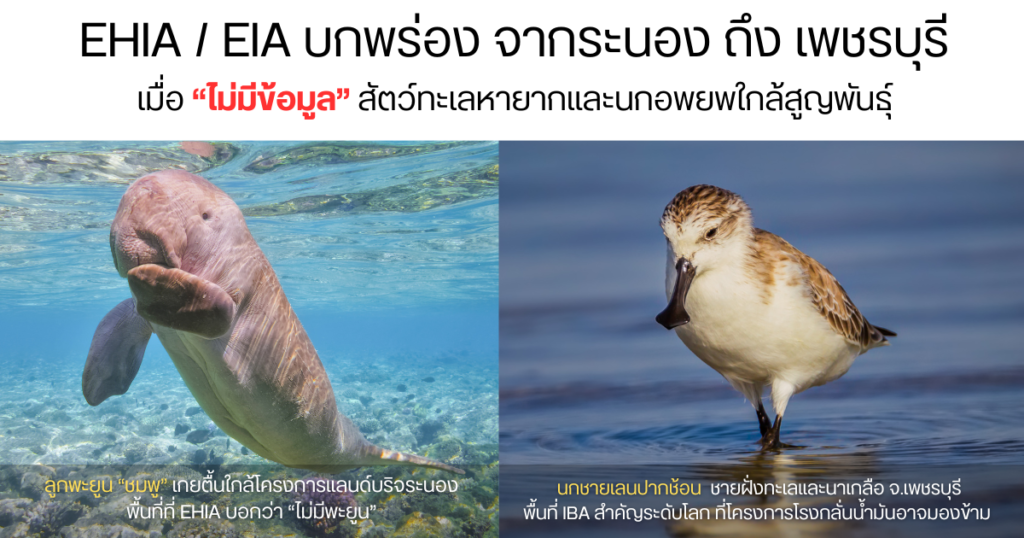
จากพะยูนที่ระนอง สู่นกชายเลนปากช้อนที่เพชรบุรี:
เมื่อรายงาน EIA/EHIA มองไม่เห็นสิ่งมีชีวิตที่ใกล้สูญพันธุ์?
จากกรณีที่ลูกพะยูนน้อย “ชมพู” มาเกยตื้นที่หาดบางเบน จ.ระนอง ห่างจากพื้นที่ตั้งโครงการท่าเรือน้ำลึกแหลมอ่าวอ่าง (Landbridge) เพียง 6-7 กิโลเมตร ความน่าตกใจคือ กลุ่ม Beach for life และชุมชนในพื้นที่ออกมายืนยันว่า ทะเลระนองคือบ้านของสัตว์ทะเลหายาก ทั้งพะยูน เต่า โลมา และวาฬน้ำลึก แต่ข้อมูลเหล่านี้กลับ “ไม่ปรากฏ” อยู่ในเล่มรายงาน EHIA ที่รัฐบาลจ้างบริษัทที่ปรึกษาศึกษาเลยแม้แต่น้อย! จนนำมาสู่คำถามสำคัญจากภาคสังคมว่า เราจะไว้วางใจกระบวนการศึกษาผลกระทบสิ่งแวดล้อมของอภิมหาโครงการเหล่านี้ได้จริงหรือ?
พ้นจากทะเลระนอง… หันกลับมามองที่ “อ่าวไทยตอนใน” บ้านของเรา
บทเรียนความบกพร่องจากรายงาน EHIA ที่ระนอง กำลังทำให้ฉากทัศน์เดียวกันนี้มีโอกาสเกิดขึ้นกับโครงการขนาดใหญ่ในพื้นที่อื่น ๆ โดยเฉพาะ “โครงการโรงกลั่นน้ำมัน จ.เพชรบุรี”
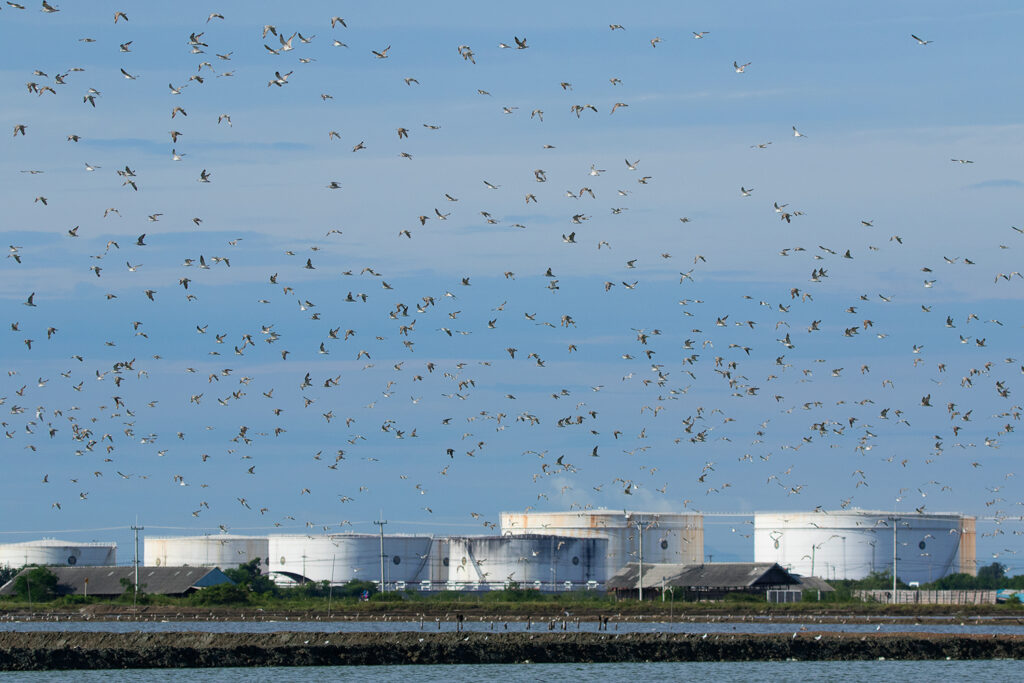
สมาคมอนุรักษ์นกและธรรมชาติแห่งประเทศไทย (BCST) และเครือข่ายองค์กรอนุรักษ์นกต่างประเทศ มีฐานข้อมูลเชิงประจักษ์ที่ชัดเจนว่า พื้นที่ชายฝั่งและนาเกลือในเขตเพชรบุรี อยู่ใน IBA และ Flyway Network Site ลำดับที่ 121 ซึ่งถูกกำหนดเป็นเขตพื้นที่และมาตรการคุ้มครองสิ่งแวดล้อม ตามประกาศพระราชกิจจานุเบกษา โดย สํานักงานนโยบายและแผนทรัพยากรธรรมชาติและสิ่งแวดล้อม (สผ.) ให้พื้นที่นี้ไม่ได้เป็นแค่แหล่งทรัพยากรท้องถิ่น แต่เป็น “จุดยุทธศาสตร์ของธรรมชาติระดับโลก”
เป็นแหล่งพักพิง-หากินที่สำคัญที่สุดแห่งหนึ่งของ “นกชายเลนปากช้อน (Spoon-billed Sandpiper)” นกอพยพที่อยู่ในสถานะใกล้สูญพันธุ์อย่างยิ่ง (Critically Endangered: CR) รวมถึงนกชายเลนและนกน้ำอพยพอีกหลายสิบชนิดที่ใช้ประโยชน์จากพื้นที่นี้ในแต่ละปี
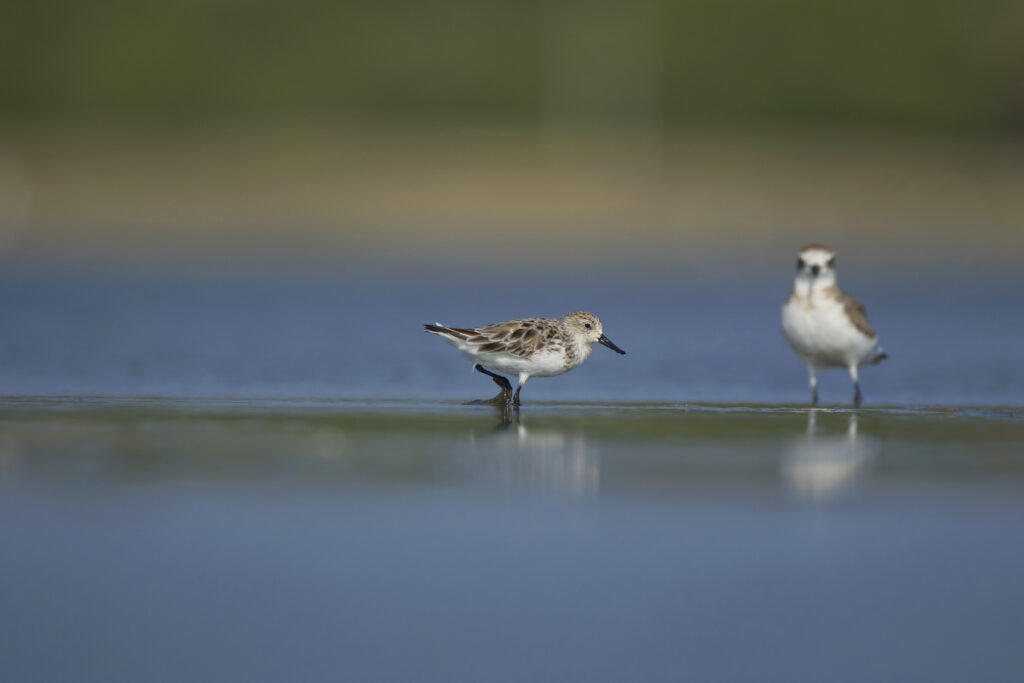
คำถามที่สังคมต้องช่วยกันจับตาคือ:
- รายงาน EIA ของโครงการโรงกลั่นน้ำมันที่เพชรบุรี จะซ้ำรอยเล่ม EHIA ของแลนด์บริดจ์ระนองหรือไม่?
- บริษัทที่ปรึกษาได้ลงพื้นที่สำรวจความหลากหลายของนกอพยพอย่างถี่ถ้วน ครอบคลุมทุกฤดูกาล และสอดคล้องกับข้อเท็จจริงในพื้นที่มากน้อยแค่ไหน?
- นกชายเลนปากช้อนและนกอพยพอีกหลายชนิด จะถูกเปลี่ยนสถานะให้ “ไม่มีอยู่จริง” ในเล่มรายงาน เพียงเพื่อเปิดทางให้โครงการอุตสาหกรรมผ่านการอนุมัติ?
การพัฒนาที่ยั่งยืนต้องไม่เริ่มต้นจากการ “ปิดตาข้างเดียว” แล้วเขียนรายงานขัดแย้งกับธรรมชาติ
สมาคมอนุรักษ์นกและธรรมชาติแห่งประเทศไทย (BCST) ขอเรียกร้องให้หน่วยงานที่เกี่ยวข้องและคณะกรรมการผู้ชำนาญการ (คชก.) ตรวจสอบความถูกต้องและคุณภาพของการศึกษาด้านความหลากหลายทางชีวภาพในรายงาน EIA ทุกฉบับอย่างเข้มงวด เพราะความมักง่ายในหน้ากระดาษ อาจหมายถึงความล่มสลายของระบบนิเวศและสิ่งมีชีวิตที่ไม่สามารถส่งเสียงเรียกร้องสิทธิ์ของพวกมันได้เอง
ลงชื่อคัดค้านโรงกลั่นน้ำมัน คลิกที่ลิงค์นี้
Sign the petition to OPPOSE the project here:

อ้างอิง
- Beach For Life Thailand https://www.facebook.com/share/p/1BwfTWouA1/
………………………………………………………………
[ From Ranong’s Dugongs to Phetchaburi’s Spoon-billed Sandpipers: When EIA/EHIA Reports Turn a Blind Eye to Endangered Species? ]
A food for thought from a recent viral incident over the past few days, when a young dugong named “Chompoo” washed ashore at Bang Ben Beach in Ranong Province just 6 to 7 kilometers away from the proposed site of the Laem Ao Ang Deep-Sea Port project (Landbridge).
What is deeply alarming is that the “Beach for Life” group and local communities have firmly integrated that the Ranong sea is a vital habitat for rare marine life, including dugongs, sea turtles, dolphins, and deep-sea whales. Yet, this crucial data is completely absent from the EHIA report conducted by the government’s hired consulting firm! This raises a critical question from society: Can we truly trust the environmental impact assessment processes of these mega-projects?
Shifting Focus to the “Inner Gulf of Thailand”
The flawed lessons from Ranong’s EHIA report are now signaling a potential copy-paste scenario for large-scale projects in other regions—most notably, the Phetchaburi Oil Refinery Project.
The Bird Conservation Society of Thailand (BCST) and its networks possess solid, empirical data proving that the Pak Thale – Laem Phak Bia conservation area in Phetchaburi is designated as an Important Bird Area (IBA) and Flyway Network Site No. 121. Protected under environmental management regulations, this area is not just a local resource but a “global strategic hotspot for nature.”
It serves as a critical sanctuary for globally threatened migratory shorebirds, including:
- Spoon-billed Sandpiper: Critically Endangered (CR)
- Nordmann’s Greenshank: Endangered (EN)
- Great Knot: Endangered (EN)
- Far-Eastern Curlew: Endangered (EN)
- …along with numerous other shorebird species of high conservation concern.
Questions that Society Must Closely Monitor:
- Will the EIA report for the Phetchaburi Oil Refinery follow in the flawed footsteps of Ranong’s Landbridge EHIA?
- Did the consulting firm thoroughly survey the diversity of migratory birds across all seasons, and does their data actually reflect the reality on the ground?
- Or will the Spoon-billed Sandpipers and other migratory birds be rendered “non-existent” in the report, simply to clear the path for industrial approval?
Sustainable development must not begin by turning a blind eye and fabricating reports that contradict nature.
BCST strongly urges relevant agencies and the Expert Review Committee (ERC) to rigorously scrutinize the accuracy and quality of biodiversity studies in all EIA reports. Negligence on paper could ultimately mean the collapse of ecosystems and the extinction of creatures that cannot speak to demand their own rights.
#BCST #SpoonbilledSandpiper #EIA #EHIA #RanongLandbridge #PhetchaburiOilRefinery #MigratoryBirds